Bee Removal in Leeds
Found a bees' nest or swarm and want it gone — but not killed? Apex Pest Control Ltd provides humane bee removal across Leeds, relocating honey bees with local beekeepers wherever possible.
BPCA-certified, free survey, no call-out fee, 7 days a week.
 BPCA-Certified Member
 Fully Insured
 7 Days a Week

Apex Pest Control Ltd provides humane bee removal in Leeds and across West Yorkshire. Apex Pest Control identifies the species and relocates honey bees rather than killing them — honey bee swarms are collected free by a local beekeeper through the BBKA and Leeds Beekeepers Association network. Nathan Marshall, the BPCA-certified Leeds technician, surveys free of charge and attends 7 days a week.
Why Apex Relocates, Not Exterminates
Apex Pest Control Ltd treats bees differently from wasps — bees are vital pollinators, and their numbers are declining, so the company relocates them rather than killing them.
Bees are vital pollinators
Bees pollinate crops and wild plants, and their numbers are declining — so Apex Pest Control relocates them rather than killing them.
Insecticide harms other colonies
Honey bees cannot be treated with insecticide responsibly: poison spreads to other colonies when bees rob the dying nest, and there is no approved honey-bee insecticide.
Often best left alone
Apex Pest Control is honest: many bumblebee and solitary-bee nests are best left alone and die off naturally by autumn.
The company helps you keep the bees, not destroy them.
How We Remove Them
How Apex Removes Bees in Leeds
Apex Pest Control Ltd identifies the species first, then takes the humane pathway — relocating honey bees with local beekeepers rather than killing them. Here is the four-step process on every Leeds bee job.
-
Survey & identify
Apex Pest Control Ltd confirms the species and whether it is a swarm or an established colony, free of charge.
-
Relocate honey bees
A honey bee swarm is collected free by a local beekeeper through the BBKA / Leeds Beekeepers Association; an established colony is removed and rehomed by a specialist beekeeper.
-
Advise on bumblebees & solitary bees
These are usually left to finish their short season naturally, with honest advice if action is genuinely needed.
-
Protect & follow up
Apex Pest Control recommends proofing the entry point after a colony is removed, so bees don't return to the same void.
Apex Pest Control identifies the species first, then takes the right pathway — relocation, honest advice, or a lawful last resort only where genuinely needed. Apex attends 7 days a week with no call-out fee.
Why Leeds Homeowners Choose Apex Pest Control
Apex Pest Control Ltd is a local, family-run pest control company, a BPCA-certified member, trusted across South and West Yorkshire.
"Nathan attends your property, identifies the species, and arranges humane relocation with a local beekeeper wherever possible."
- BPCA Level 2 Award in Pest Management
- RSPH Level 2 qualified — pest management
- Works to the BPCA Code of Best Practice for Honey Bees
- Relocates with the Leeds Beekeepers Association network
- Local Leeds technician — attends every job himself
Humane by Default
Apex Pest Control Ltd relocates bees with local beekeepers — it does not exterminate pollinators.

Local Leeds Technician
Nathan Marshall is your BPCA-certified Leeds technician — you speak to the team, not a call centre.
40 Years of Know-How
Founder Tony Johnson has 40 years of experience across pest control, forestry and wildlife — and gives honest advice, telling you when a nest is best left alone.
Accredited & Insured
BPCA member, CHAS registered and RSPH Level 2 qualified, carrying £5M public liability insurance.
Free survey, no call-out fee — every bee job is quoted upfront after a free survey. Call Nathan — your local Leeds technician · 0113 390 4270.
Do We Cover Your Area in Leeds?
We provide humane bee removal across Leeds and all surrounding areas — covering every LS postcode (LS1–LS29) and the wider West Yorkshire region. Click any area below to centre it on the map.
Not listed? Call us — we may still be able to help.
Call Our Leeds Team — 0113 390 4270Areas Covered
Bee Removal Across Leeds
Explore our local area pages — detailed coverage for every key Leeds district.
Transparent Pricing
Bee Removal Prices in Leeds
Apex Pest Control Ltd gives a free survey for bees in Leeds — every job is quoted upfront, with no call-out fee, and never invented on the phone.
Always
Free survey
no call-out fee, ever
- A free survey to identify the species and confirm a swarm or colony
- An accessible honey bee swarm is usually collected free by a local beekeeper through the BBKA / Leeds Beekeepers Association
- An established colony in a wall, chimney or roof is specialist work, quoted after the survey as the price depends on access
- No call-out fee and no price invented on the phone
Apex Pest Control will arrange or advise free swarm collection through the BBKA swarm collector map / Leeds Beekeepers Association, and quotes established colony work only after a free survey. View our full price list.
What Apex Customers Say
"Knowledgeable and professional; advised rather than upselling treatment."
"Quick, punctual, knowledgeable, trustworthy and reassuring."
"A gem of a company — used them for years. Tony never overplays the treatment needed."
Reviews are genuine and labelled by their true location and platform. Apex does not yet hold Leeds-specific bee reviews and does not present any review as a Leeds review.
Pest Intelligence
Know Your Bee
Apex Pest Control Ltd identifies the species before doing anything, because the right pathway depends on it.
Bees in Leeds — and Where They Nest
Apex Pest Control Ltd is called to bees right across Leeds, and the city’s housing decides where they settle. Honey bee swarms appear in May and June, resting on a branch, fence or wall before moving on.
Established colonies take hold in the wall cavities, chimneys, roof spaces and soffits of the Victorian and Edwardian housing of Roundhay, Headingley and Chapel Allerton, while bumblebees nest in bird boxes, sheds and garden banks across Horsforth, Morley and Garforth.
Apex Pest Control identifies the species first, then relocates the bees the right way — working with the Leeds Beekeepers Association network.
Leeds at a Glance
Bee Removal Done Legally and Responsibly
Apex Pest Control Ltd carries out every bee job to UK standards and BPCA best practice, with qualified technicians and a relocation-first approach.
- Beneficial invertebrates — bees are not a legally protected species, but the Health and Safety Executive treats them as beneficial invertebrates to be protected where possible, so Apex Pest Control relocates rather than destroys.
- No approved insecticide for honey bees — there is no approved insecticide for honey bees, and the least-harmful method must always be used, which is why relocation comes first.
- BPCA Code of Best Practice for Honey Bees (2019) — Apex Pest Control follows the BPCA Code of Best Practice for Honey Bees (2019) on every job.
- Lethal control is a last resort — it is used only as a genuine last resort, where a nest is a real public-safety risk and relocation is not possible.
Apex Pest Control treats bees responsibly — relocating wherever possible and citing gov.uk / HSE guidance on bees as beneficial invertebrates.
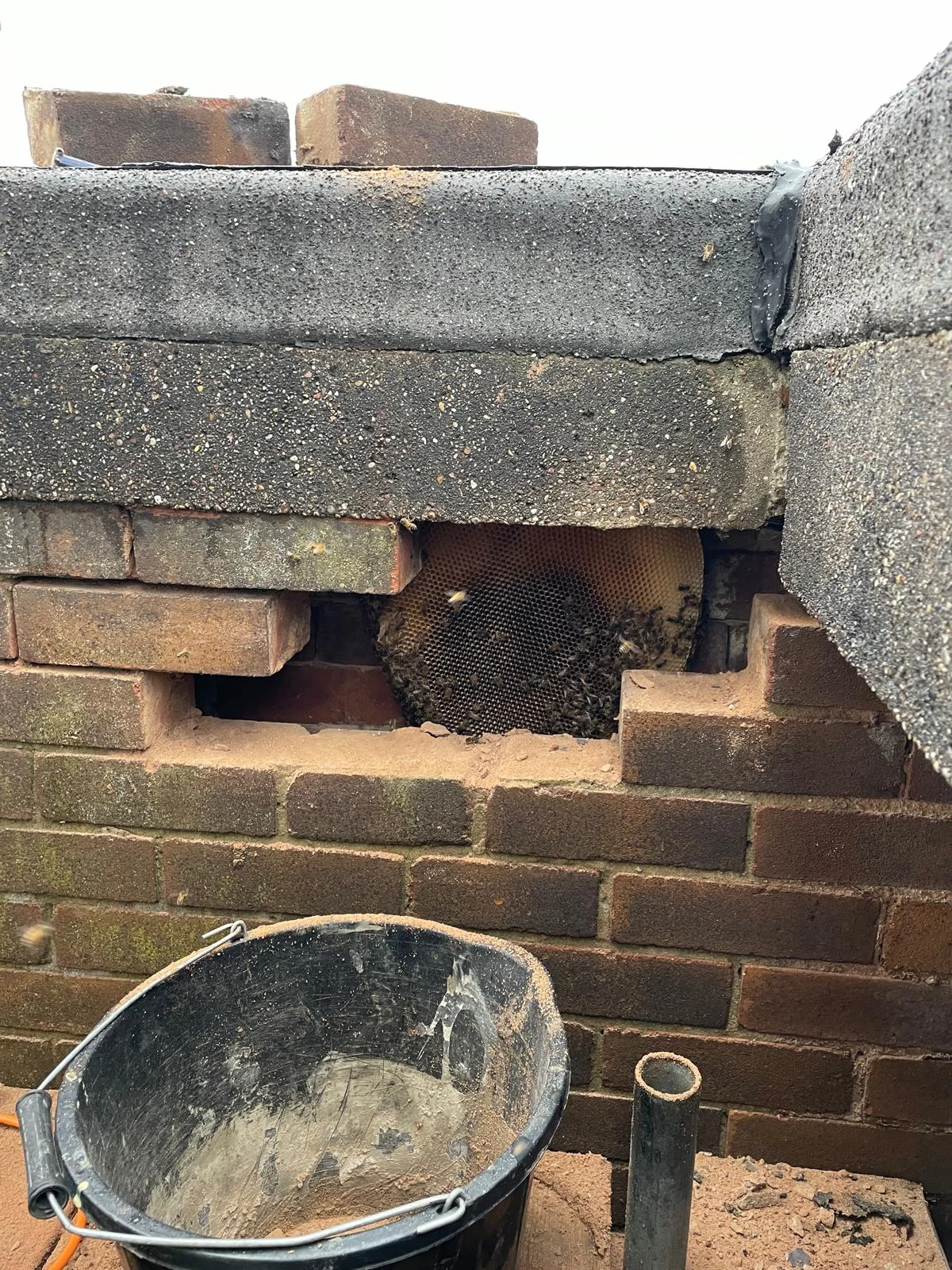
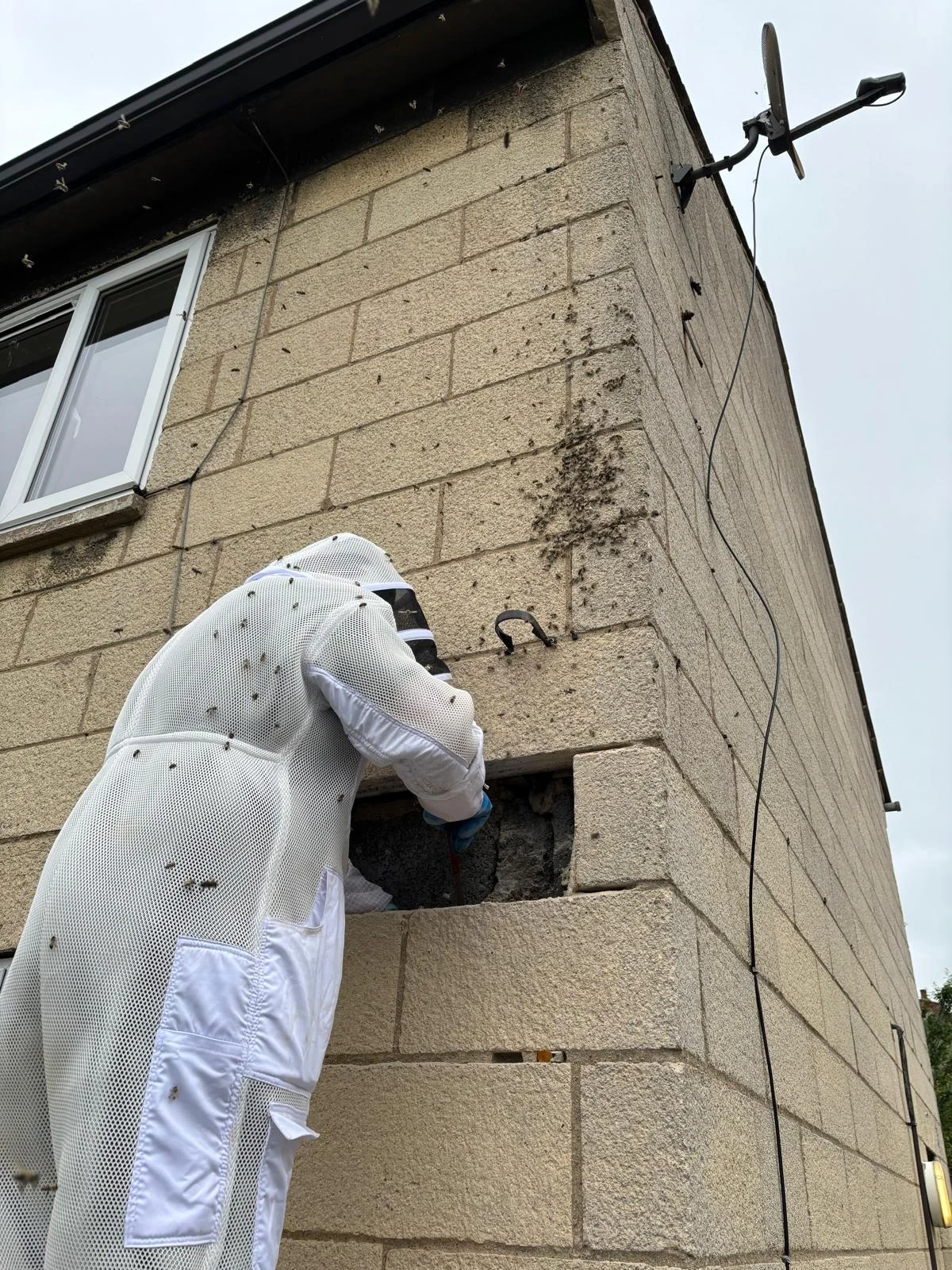
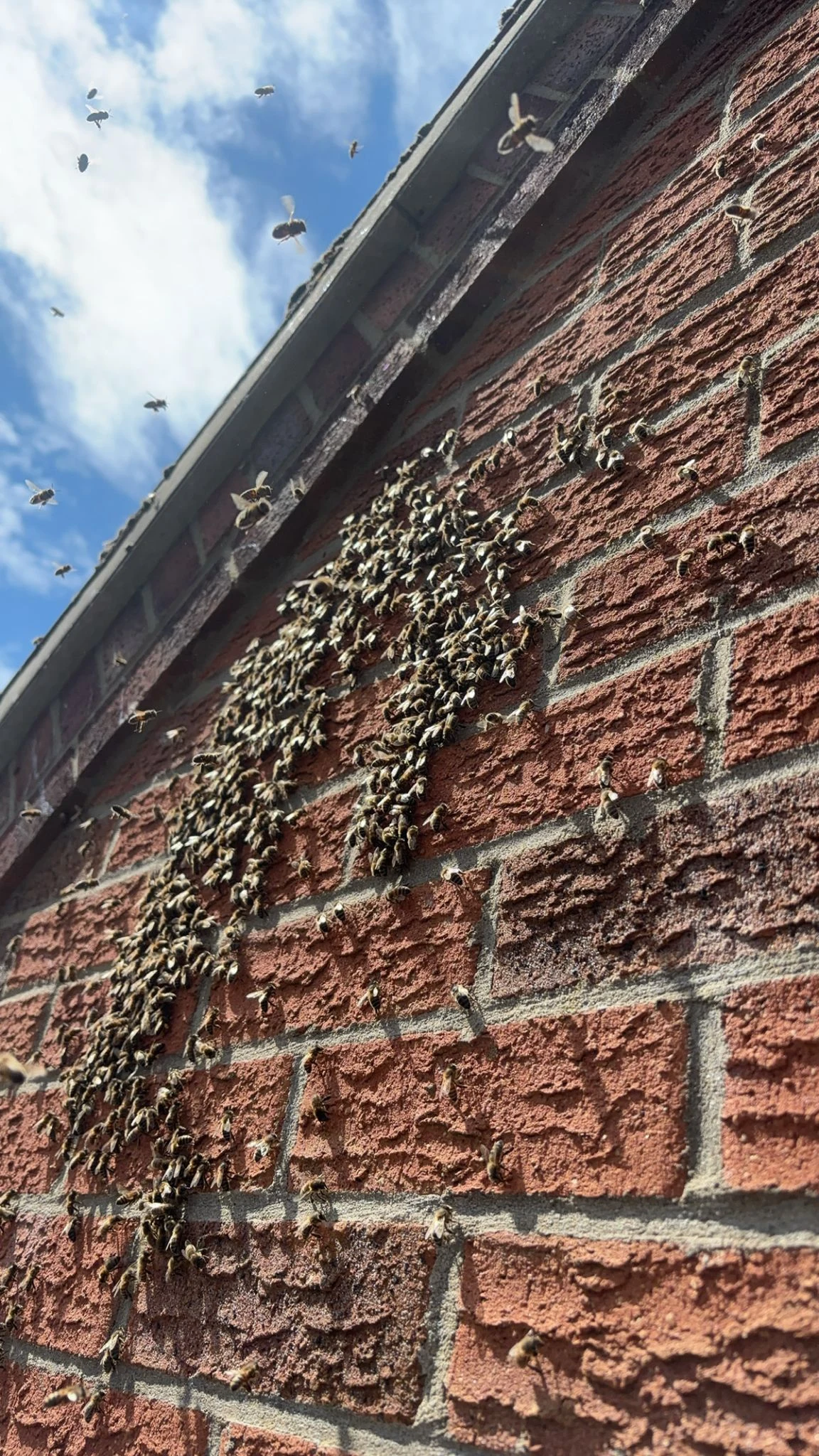
See Real Apex Bee Relocation
Real Apex Pest Control relocation work across Leeds and Yorkshire — honey bee colonies and swarms removed and rehomed, not exterminated.
For Leeds Landlords & Businesses
Apex Pest Control Ltd also helps Leeds landlords, letting agents and businesses deal with bees safely and responsibly — fast species identification, humane relocation, and a clear written record of the work for your files.
Apex Pest Control identifies the species, relocates honey bees with local beekeepers wherever possible, and gives honest advice where a nest is best left alone.
For sites that need ongoing cover, Apex Pest Control Ltd offers scheduled commercial pest management with full documentation. Explore our commercial pest control →
For Landlords & Commercial Sites
- Fast species identification and humane relocation
- A clear written record of the work for tenancy and audit files
- BPCA-certified, £5M-insured technicians
- Scheduled commercial pest contracts available
Bee Removal in Leeds — Your Questions Answered
Answers to the questions Leeds residents ask most often about bee removal. Each answer is self-contained and mirrored in the page schema.
How do I get rid of bees in Leeds without killing them?
Apex Pest Control Ltd identifies the species first, then relocates rather than kills. A honey bee swarm is collected free by a local beekeeper through the BBKA / Leeds Beekeepers Association, and an established colony is removed and rehomed by a specialist beekeeper.
Are bees protected — am I allowed to remove a nest?
Bees are not a legally protected species in the UK, so removal is lawful, but the HSE treats them as beneficial invertebrates to protect where possible. Apex Pest Control Ltd follows BPCA best practice and relocates rather than destroys.
How much does bee removal cost in Leeds?
Apex Pest Control Ltd gives a free survey with no call-out fee. An accessible honey bee swarm is usually collected free by a local beekeeper. An established colony in a wall, chimney or roof is quoted after the survey, as the price depends on access.
There's a bees' nest in my wall or chimney — what do I do?
That is an established colony, which is specialist work. Apex Pest Control Ltd surveys it, confirms the species, and arranges removal and rehoming by a specialist beekeeper, then advises on proofing the entry point.
There's a bee swarm in my garden — who removes it?
A swarm is a temporary cluster that often moves on within a day or two. Apex Pest Control Ltd will identify it and arrange free collection by a local beekeeper through the BBKA / Leeds Beekeepers Association.
Will Apex kill my bees?
No. Apex Pest Control Ltd relocates bees as the default. Lethal control is used only as a genuine last resort, where a nest is a real public-safety risk and relocation is not possible.
Is it bees or wasps?
Apex Pest Control Ltd identifies the species on the survey. Bees are furry and protected as pollinators; wasps are smooth and treated differently — see our wasp nest removal in Leeds.
Still have questions about bee removal in Leeds? Call 0113 390 4270 — we are available 7 days a week.
Related Leeds Services
Other Services in Leeds
Bee Removal · Leeds
Bees at Your Leeds Home? Call Apex Today
Apex Pest Control Ltd will identify the species, relocate them the right way, and give you honest advice — for a free survey, with no call-out fee. Call Nathan, your local Leeds technician, on 0113 390 4270, 7 days a week, or get free advice.
- 0113 390 4270 — Leeds local line
- info@apex-pest-control.co.uk
- Mon–Fri 8am–7pm · Sat–Sun 8am–1pm
- Serving Leeds & West Yorkshire